Find a domain name now!
Showing posts with label GATE. Show all posts

Friday, March 30, 2012

Polysaccharides

Polysaccharides are carbohydrates formed by more than 9 monosaccharides linked by glycosidic bonds.

When they are formed by the same kind of monosaccharides, they are called homopolysaccharides, like starch, glycogen and cellulose, formed each of them by hundreds of molecules of glucose linked by glycosidic linkages.

If the polysaccharides molecules are formed by different kinds of monosaccharides, they are considered heteropolysaccharides. Hyaluronic acid, formed by thousands of alternative units of N-acetyl glucosamine and glucuronic acid, is an example of heteropolysaccharide.  

HOMOPOLYSACCHARIDES:

Cellulose

Cellulose is a linear polymer of D-glucose residues bonded by b(1, 4)-O-glycosidic linkages. It is the most abundant carbohydrate in nature.

It is formed by glucose units, linked by Beta-1, 4 O-glycosidic linkages. We can say then that, if we consider the kind of linkage, the repeating unit in cellulose is cellobiose, the disaccharide formed by two molecules of glucose linked by Beta-D-O glycosidic bonds, (that is why some text books say that the monomer in cellulose is cellobiose).

The long fibers of cellulose are held together by intermolecular hydrogen bonds. Hydrogen bonding continues in the same plane with other chains as well as in planes above and below this plane to form strong, fibrous bundles. It made cellulose very appropriate for its structural function in plants

Since cellulose is formed by glucose molecules, it can be a source of energy for certain species. The lack in human beings of appropriate enzymes for digesting cellulose make this polysaccharide unsuitable for human nutrition (Have you though about how hunger in the world could disappear if we had enzymes for digesting cellulose?). Cellulose and derivatives are used as a component of laxatives for humans.

Starch:

Starch is the second most abundant carbohydrate in nature.

The biological functions include, in plants, the main way of storage of sugar, and consequently, of energetic sources; in humans, the first supply of glucose on diet (Answer to C-O7)

Starch is not really a molecule, but a grain formed by two different kinds of molecules: Amylose and Amylopectin

Amylose

Amylose is a linear molecule formed by glucose units linked by alpha-1, 4 O glycosidic linkages. Taking in account the kind of linkage we can say that the repeating unit in amylose is maltose. (It explains that some books indicate that the monomeric unit in amylose is maltose).

Amylose molecule is helicoidal

Amylopectin

Amylopectin is the second type of molecule that forms starch. It is a branched molecule, formed also by glucose. Amylopectin contains D-glucose residues bonded together by a(1, 4)-O-glycosidic linkages with branching through a(1 6)-O-glycosidic linkages.

The disaccharides that can be obtained from the digestion of amylopectin are maltose and isomaltose.

Amylopectin shows a branch each 24-30 units of glucose,

Glycogen
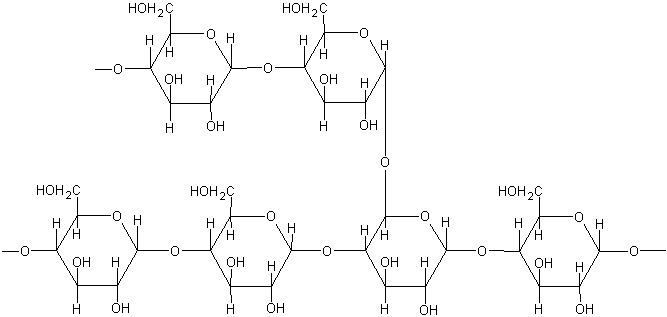
The structure of glycogen is very similar to amylopectin but more branched, with one branch every 8 to 12 glucose unit

Glycogen is the way in which glucose is stored in animals. Glycogen is stored mainly in liver (to release glucose to blood when necessary) and in muscle, where it is used as a reserve of energy for muscular contraction (Answer to C-o8)

HETEROPOLYSACCHARIDES

Heteropolysaccarides contain two or more different kind of monosaccharides. Usually they provide extracellular support for organisms of all kingdoms: the bacteria cell envelope, or the matrix that holds individual cells together in animal tissues, and provides protection, shape and support to cells, tissues and organs.

Heteropolysaccharides provide extracellular support to very different organisms, from bacteria to humans; together with fibrous proteins, like collagen, elastin, fibronectin, laminin and others, heteropolysaccharides are the most important components of the extracellular matrix.  Hyaluronic acid, condroitin sulfates and dermatan sulfates are important heteropolysaccharides in the extracellular matrix. These heteropolysaccharides usually are formed by the repetition of a disaccharide unit of an aminosugar and an acid sugar. 

A typical example

Other common constituents are sulfate groups linked to certain monosaccharides. Usually heteropolysaccharides are associated with proteins forming proteoglycans, glycosaminoglycans or mucopolysaccharides (since they are abundant in mucous secretions). As a group, they perform diverse functions: structural, water metabolism regulation (as a reservoir of water), cellular cement, biological sieve, biological lubricant, docking sites for growth factors, among other functions.

Established specific functions of some glycosaminoglycans are:

Hyaluronic Acid (Hyaluronate): It is a lubricant in the synovial fluid of joints,

give consistency to vitreous humor, contributes to tensile strength and elasticity of cartilages and tendons (Answer to C-O6)

Chondroitin Sulfates: contributes to tensile strength and elasticity of cartilages, tendons, ligaments and walls of aorta.

Dermatan sulfate (former chondroitin sulfate B) is found mainly in skin, but also is in vessels, heart, lungs. It may be related to coagulation and vascular diseases and other conditions.

Keratan sulfate: Present in cornea, cartilage bone and a variety of other structures as nails and hair.

Heparin

It is a potent natural anticoagulant produced in the Mast Cells that causes antithrombin bind to thrombin and produce inhibition of blood coagulation.

Glycosaminoglycans are synthesized in the ER and Golgi. They are degraded by lysosomal hydrolases. A deficiency of one of the hydrolases results in a mucopolysaccharidosis. These are hereditary disorders in which glycosaminoglycans accumulate in tissues, causing symptoms such as skeletal and extracellular matrix deformities, and mental retardation.

Examples of these genetic diseases are Hunter and Hurler syndromes.

These diseases, caused by different enzyme deficits, are characterized by physical deformities, mental retardation and disturbances in the degradation of heparan sulfate and dermatan sulfate.

Thursday, March 11, 2010

Molecular Biology Notes for Students

Nucleic Acids Nucleic Acids Classification, Nucleic Acids Structures,

            DNA, DNA as genetic material, Structure of DNA, Organization Of DNA, Supercoiling, DNA Code,

DNA Manipulation, DNA Applications, DNA Chronicle, DNA Timeline, Plasmid DNA, Plasmids,

            RNA, RNA Synthesis, Structural Classification of RNA,

Central Dogma & Genetic Code

Genetic Nomenclature, exploring genes

Replication ( DNA DNA)

Replication, Prokaryotic DNA Replication, DNA Supercoiling, Topoisomerases

E.coli DNA Polymerase I - Klenow Fragment, DNA Polymerases IV and V, HIV-1 Reverse Transcriptase, Rat DNA Polymerase Beta,

DNA Pol III Beta-Subunit & PCNA, Bacteriophage T7 DNA Ligase

Recombination,

Transcription ( DNA →RNA )

Transcription, Exons and coding sequences, Eukaryotic Transcriptional Regulator

IFN-beta enhanceosome, RNA polymerase II transcription, Origin recognition Complex, Transcription-repair coupling

RNA Pol II General Transcription Factors, TBP, TFIIA and TFIIB, NF-kappa-B
Transcriptional Regulation: Transcription Termination, the trp Operon, Post Transcriptional Process

RNA Folding, Control of gene expression, Regulation, Transcription, RNA processing, mRNA turnover, Gene silencing

Translation ( mRNAProtein )

Translation, Protein Synthesis, protein synthesis2, mRNA Translation, Aminoacyl-tRNA Synthetases, control of gene expression,

Gene regulation, The lac operon, Operon, The lac Operon, CAP Site, Control of Gene Expression, Protein synthesis and turnover

Post Translational Process, Protein folding, Molecular Chaperones,

Protein Trafficking, Protein translocation, Protein Modifications and Targeting

Protein Folding, Protein folding 2,

DNA and Protein, DNA Protein Interactions, Gene interactions,

Selectable Markers

Transformation, Transgenic Plants, Transgenic Concerns, GMO Detection, Functional Foods

Transposons

DNA Repair, DNA Damage & Repair

DNA Repair Enzymes

Splendid Review of DNA Repair Enzyme Structures

Uracil-DNA Glycosylase

Restriction / Modification Systems

Enzymes

          Exonuclease III-Cuts Only 3' end

          S1 Nuclease -(from the fungus Aspersillus oryzae) cleave single strand

          DNase I -(cut both single strands )

Restriction Mapper

Bacteriology for the Molecular Biologist

Controls in Molecular Biology

Human Chromosome Analysis

Wednesday, March 10, 2010

Biochemistry / Biomolecules Notes for Students

Basic Biochemistry -

1) Structure of atoms, Atoms and molecules, molecules and chemical bonds, Molecules and weak bonds, principle of physical chemistry, Non covalent Interaction,

2) Thermodynamics, kinetics, dissociation and association constants

3) Acids, Bases and Buffers, Principle of Ionization of Weak Acids, Titration of a Weak Acid illustrating its Ionization and Buffering Property, Ionization of Simple Amino Acids, Ionization Rules 1, Ionization of Complex Amino Acids, Ionization of His, Calculating pI (Isoelectric Point or pH) of His, Ionization Rules 2

Water - water1, water and organic molecules, Important properties, the low of mass action, Kw

            dissociation of water and its ion product,

Carbohydrate - Introduction, Carbohydrates classification, properties, function,

1) Monosaccharides: nomenclature, stereochemistry, & cyclic forms, aldolase, glucose, fructose, galactose, Disaccharide: Glycosidic bonds

2) Oligosaccharides of glycoproteins & glycolipids Oligosaccharides, sucrose, maltose

3) Polysaccharides - amylose, amylopectin & cellulose, Glycosides,

Homopolysaccharides

Glucose monomer - starch, glycogen, cellulose, chitin

Galactose monomer - agar, pectin

Heteropolysaccharides

Hemicellulose

Glycosaminoglycans & proteoglycans, glycolipids, Sugar derivatives, Lectins, Glycosaminoglycans and Proteoglycans

Protein - properties (primary, secondary, tertiary, quaternary) Proteins Functions, Classification, Structure,

Protein Architecture-I, Architectrure-II, Stability And Unfolding, Physicochemical Properties, Protein Hormones,

The Influence Of Environment On Protein Conformation, Correlations b/w Amino Acid Seq. & Conformation

Intermolecular Interactions In Proteins,

1) Amino acids shape & structure of amino acids, structure, functional, properties, Peptide bond, b-sheet

Amino Acid Sequencing Methods, Characterization of Proteins

1) Aliphatic - alanine, glycine, isoleucine, leucine, valine

2) Nonpolar R group- methionine, phenylalanine, proline, tryptophan

3) Positively Charged- arginine, histidine, lysine

4) Negatively Charged- aspartate, glutamate

5) Polar- asparagine, cysteine, glutamine, serine, threonine, tyrosine

2) Structural Biophysics of Protein Principles of Protein Structure, Primary Structure, Protein Secondary Structure, Protein Tertiary Structure, Protein Folding and Evolution, Evolution of Protein Structures, Part I. Homologous Proteins, Evolution of Proteins/Enzymes with Complex Functionality, Enzymes with the Same 3-D Shape but Different Functions, Summary

Membrane Protein Structure, Secondary structure and motif, Motif and Domains, Globular protein & Protein aggregates, Evolution of protein & Protein engineering, Primary Structure, Secondary Motifs, Tertiary Architecture And Quaternary Organization,

3) Enzymes Enzyme Biochemistry Introduction, function, reaction and enzymes, Nomenclature And Mechanism Of Enzyme Catalysis, Enzyme Kinetics, Enzymes as Nano-Engines, Enzyme Kinetics Hemoglobin, Allosteric Enzymes and Regulation of Enzyme Activity, Factor That Influence Enzyme Activity, Enzyme Catalysis, Enzyme Catalysis, Mechanisms, Enzyme Catalysis Examples1, Examples2, The Specificity Of Enzymes, Enzyme Kinetics

Enzyme Inhibition, Noncompetitive Inhibition,

Enzyme Regulation, Allosteric Regulation, Hemoglobin - Positive Cooperative, Feedback Regulation and Covalent Modification, Summary

4) Protein Engineering Mutagenesis & Enzyme Catalysis via Transition State, Transition-State Theory of Enzyme Catalysis, Transition-State Analogs as Very Good Enzyme Inhibitors, Transition-State in Enzymes & Biotechnology, Site-Directed Mutagenesis of an Enzyme, Transition-State Intermediate Binding in an Enzymes

Isolation techniques and purification of proteins and amino acids, Protein Purification I, II, Summary

Henderson-Hasselbalch equation, Protein Architecture

Lipids - Types, classification, nomenclature, properties, function, lipids and membranes, Biological Membranes

Fats = Glycerol + 3 fatty acids

1) Simple lipids, lipid 2, Oils, Waxes

2) Compound Lipids, Phospholopids, Sphingolipids, Glycolipids, Lipoproteins, Lecithin, Cephalin, Plasmalogen, Lipositol, Sphingomyelin,

Terpenoids and Steroids, Terpenes, Sterols, Androgens and estrogens, Adrenal corticolsteroids,

Application Of Phospholipids In Biology, Steroid And Steroid Hormones

Basic Techniques

3D structure membrane proteins

Intermediary Metabolism Notes for Students

Metabolism Cellular Metabolism, Inborn Errors in Metabolism

Carbohydrate Metabolism

Glycolysis, Glycolysis, Glycolysis & Gluconeogenesis, Gluconeogenesis, Glycolysis and the Krebs Cycle

The TCA Cycle and PDH, Kreb's - TCA - Citric Acid Cycle,

Pentose Phosphate Pathway, Pentose Phosphate Pathway,

Glycogen Metabolism, Glycogen Metabolism2, Glycogen Biosynthesis & Galactose Pathway,

            Calvin Cycle,

Metabolism of Major Non-Glucose Sugars,

Metabolism of Ethanol, Glucuronate Metabolism,

Regulation of Blood Glucose Levels, AMPK: Master Metabolic Regulator, Type 1 and 2 Diabetes Mellitus,

Lipid Metabolism

            Triacylglycerol Metabolism,

Activation of Fatty Acids, Beta-Oxidation of Fatty Acids - even chain, Beta-Oxidation of Fatty Acids - odd chain,

Beta-Oxidation of Polyunsaturated Fatty Acid, Alpha-Oxidation Pathway, Cholesterol Biosynthesis 1,

            De Novo Biosynthesis of Fatty Acids,

Phospholipid Metabolism, Sphingolipid Metabolism, Eicosanoid Metabolism,

Fatty Acid Oxidation, Cholesterol and Bile Metabolism,

Amino Acid Metabolism

Amino Acid Metabolism, Amino Acid Derivatives,

            Glutamate Reactions, Kreb-Henseleit Urea Cycle, Shikimate Pathway, Phenylalanine and Tyrosine Biosynthesis,

Tryptophan Biosynthesis,

Energy Metabolism

ATP metabolism, ATP and Biological energy, Chemistry of ATP Synthesis

Oxidative Phosphorylation, Mitochondria & Oxidative Phosphorylation, Oxidative Phosphorylation

Methane Metabolism

DNA Metabolism

RNA Metabolism

Photosynthesis - Photosynthesis1, Photosynthesis2, Photosynthesis3

Nucleotide Metabolism DNA Metabolism, RNA Metabolism

Other Metabolism Iron, Heme and Porphyrin Metabolism

Nitrogen Metabolism and the Urea Cycle, Nitrogen Fixation

Cellular Energetics - Biosynthesis, Catabolism

Anaerobic Pathways - Glycolysis & Fermentation

Aerobic Pathways - Krebs & Beta Oxidation

Monday, February 22, 2010

Nasty Biochemistry

The most boring subject in the world is biochemistry.

I hate it as much as I love the books of mystery.


Oxidase, reductase and hydrogenase,

They give me anxiety and scares.


Its nomenclature and structures,

Forget me the taste of burgers.


Proteins, polypeptides and peptides,

They make we want to commit suicide.


Imbibitions and adsorption,

Always hurt my emotions.


Osmosis and osmotic pressure,

Keep me always under high blood pressure.


Amino acids with basic chain,

Shower on me, the “acid rain”


Avogadro’s and Henderson’s laws,

Are as dangerous as dog’s paws.


Fatty acids and waxes,

They seem to me like taxes.


O! God save me from this creature,

It is a notorious danger

Friday, January 8, 2010

GATE- XL-Life Sciences Previous Papers 2006

Graduated Aptitude Test in Engineering Examinations
GATE Previous Papers - 2006
XL-Life Sciences


GATE- XL-Life Sciences Previous Papers 2007

Graduated Aptitude Test in Engineering Examinations
GATE Previous Papers - 2007
XL-Life Sciences


GATE XL-Life Sciences Previous Papers 2008

Graduated Aptitude Test in Engineering Examinations
GATE Previous Papers - 2008
XL-Life Sciences


Thursday, December 24, 2009

WHAT IS NEW IN GATE 2010 ?

  1. New Paper introduced in GATE 2010: Biotechnology (BT) has been introduced as an independent paper from GATE 2010.
  2. Common Component of General Aptitude (GA) introduced in GATE 2010: Each GATE paper shall have a common General Aptitude (GA) component carrying 15 marks from GATE 2010.
  3. Papers to be discontinued from GATE 2010 onwards:
    • Due to introduction of an independent paper in Biotechnology (BT), the Biotechnology section in Life Sciences (XL) paper has been discontinued from GATE 2010.
    • There will not be GATE 2010 examination in Pharmaceutical Sciences (PY) paper. For more information about the organization which will be conducting a GATE like examination for PY, the candidates are advised to visit GATE 2010 website from time to time.
  4. ONLINE Examination for TF and MN paper:
    • Computer based ONLINE examination for the paper with code TF will be held in Bangalore, Chennai, Delhi, Guwahati, Kanpur, Kharagpur, Mumbai and Roorkee on February 07, 2010 (Sunday) from 09.30 hrs to 12.30 hrs
    • Computer based ONLINE examination for the paper with code MN will be held in Bangalore, Chennai, Delhi, Guwahati, Kanpur, Kharagpur, Mumbai and Roorkee on February 07, 2010 (Sunday) from 14.30 hrs to 17.30 hrs
  5. Online Application form with online payment option: Online payment is possible through HDFC bank payment gateway using Mastercard or Visa credit cards, and debit cards of certain banks as listed on the web site. Offline payment is also possible through a demand draft.
  6. New Examination Cities included:
    • IIT Bombay Zone: Loni, Pandharpur.
    • IIT Delhi Zone: Dausa, Mahesana.
    • IIT Guwahati Zone: Tezpur.
    • IIT Madras Zone: Chittor, Gudur, Karimnagar, Khammam, Kothagudem, Nalgonda
    • IIT Roorkee Zone: Muzaffarnagar
  7. New Bank Branches included for selling Information Brochure and GATE 2010 Application Forms:
    • IISc Bangalore Zone: Bangalore (Jayanagar)
    • IIT Bombay Zone: Loni (Near Swami Samarth Mandir), Pandharpur (Sawarkar Road), Shegaon
    • IIT Delhi Zone: Ahmedabad (Maninagar), Chandigarh (Sector 34A), Jaipur (Malviya Nagar), New Delhi (R. K. Puram; Mayur Vihar-I), Surat (Ghod Dod Raod)
    • IIT Guwahati Zone: Bongaigaon (Main), Tezpur(Main)
    • IIT Kharagpur Zone: Visakhapatnam (Dabagarden)
    • IIT Madras Zone: Gudur, Karimnagar, Khammam, Kothagudem, Nalgonda
    • IIT Roorkee Zone: Agra (Gandhi Ashram)

ABOUT GATE 2010

GATE 2010 will include both ONLINE and OFFLINE examinations as per the following details:
GATE ExaminationExamination modeExamination citiesExamination Date (day)Examination Time
GATE Examination of TF paperONLINE examinationBangalore, Chennai, Delhi, Guwahati, Kanpur, Kharagpur, Mumbai, RoorkeeFebruary 07, 2010 (Sunday)09.30 hrs - 12.30 hrs
GATE Examination of MN paperONLINE examinationBangalore, Chennai, Delhi, Guwahati, Kanpur, Kharagpur, Mumbai, RoorkeeFebruary 07, 2010 (Sunday)14.30 hrs - 17.30 hrs
GATE Examination in all other papersOFFLINEIn all cities listed in Examination CitiesFebruary 14, 2010 (Sunday)09.30 hrs - 12.30 hrs
TF : Textile Engineering and Fibre Science
MN : Mining Engineering

ONLINE Examination : Examination using computers where the candidate will select the correct answer out of four options with the help of keyboard and mouse

OFFLINE Examination : Examination in the usual manner as in the previous years where the candidate will mark the correct answer out of four options in an Optical Response Sheet (ORS) by darkening the appropriate bubble.

The list of papers for GATE 2010 is given under Structure of GATE. The question papers will be inEnglish only.

Before applying for GATE 2010, candidates must assure themselves that they have chosen the right paper, which qualifies them to become eligible to seek admission to the specific programme they are interested in. The criteria for postgraduate admission with Scholarship/ Assistantship are different in various Institutes/ Universities. GATE Offices will not provide any information in this regard. For more details, the candidates are required to contact the Institutes/ Universities to which they are interested in seeking admission.

The choice of the paper is the responsibility of the candidate. Information about the pattern of the question papers is given under Question Paper Pattern.

GATE syllabus - ZOOLOGY - XL : SECTION - L

Animal world:Animal diversity, distribution, systematics and classification of animals, phylogenetic relationships.

Evolution: Origin and history of life on earth, theories of evolution, natural selection, adaptation, speciation.

Genetics: Principles of inheritance, molecular basis of heredity, mutations, cytoplasmic inheritance, linkage and mapping of genes.

Biochemistry and Molecular Biology: Nucleic acids, proteins, lipids and carbohydrates; replication, transcription and translation; regulation of gene expression, organization of genome, Kreb's cycle, glycolysis, enzyme catalysis, hormones and their actions, vitamins.

Cell Biology: Structure of cell, cellular organelles and their structure and function, cell cycle, cell division, chromosomes and chromatin structure. Eukaryotic gene organization and expression (Basic principles of signal transduction).

Animal Anatomy and Physiology: Comparative physiology, the respiratory system, circulatory system, digestive system, the nervous system, the excretory system, the endocrine system, the reproductive system, the skeletal system, osmoregulation.

Parasitology and Immunology: Nature of parasite, host-parasite relation, protozoan and helminthic parasites, the immune response, cellular and humoral immune response, evolution of the immune system.

Development Biology: Embryonic development, cellular differentiation, organogenesis, metamorphosis, genetic basis of development, stem cells.

Ecology: The ecosystem, habitats, the food chain, population dynamics, species diversity, zoogerography, biogeochemical cycles, conservation biology.

Animal Behaviour: Types of behaviours, courtship, mating and territoriality, instinct, learning and memory, social behaviour across the animal taxa, communication, pheromones, evolution of animal behaviour.

GATE syllabus - MICROBIOLOGY - XL : SECTION - K

Historical Perspective: Discovery of microbial world; Landmark discoveries relevant to the field of microbiology; Controversy over spontaneous generation; Role of microorganisms in transformation of organic matter and in the causation of diseases.

Methods in Microbiology: Pure culture techniques; Theory and practice of sterilization; Principles of microbial nutrition; Enrichment culture techniques for isolation of microorganisms; Light-, phase contrast- and electron-microscopy.

Microbial Taxonomy and Diversity: Bacteria, Archea and their broad classification; Eukaryotic microbes: Yeasts, molds and protozoa; Viruses and their classification; Molecular approaches to microbial taxonomy.

Prokaryotic and Eukaryotic Cells: Structure and Function: Prokaryotic Cells: cell walls, cell membranes, mechanisms of solute transport across membranes, Flagella and Pili, Capsules, Cell inclusions like endospores and gas vesicles; Eukaryotic cell organelles: Endoplasmic reticulum, Golgi apparatus, mitochondria and chloroplasts.

Microbial Growth: Definition of growth; Growth curve; Mathematical expression of exponential growth phase; Measurement of growth and growth yields; Synchronous growth; Continuous culture; Effect of environmental factors on growth.

Control of Micro-organisms: Effect of physical and chemical agents; Evaluation of effectiveness of antimicrobial agents.

Microbial Metabolism: Energetics: redox reactions and electron carriers; An overview of metabolism; Glycolysis; Pentose-phosphate pathway; Entner-Doudoroff pathway; Glyoxalate pathway; The citric acid cycle; Fermentation; Aerobic and anaerobic respiration; Chemolithotrophy; Photosynthesis; Calvin cycle; Biosynthetic pathway for fatty acids synthesis; Common regulatory mechanisms in synthesis of amino acids; Regulation of major metabolic pathways.

Microbial Diseases and Host Pathogen Interaction: Normal microbiota; Classification of infectious diseases; Reservoirs of infection; Nosocomial infection; Emerging infectious diseases; Mechanism of microbial pathogenicity; Nonspecific defense of host; Antigens and antibodies; Humoral and cell mediated immunity; Vaccines; Immune deficiency; Human diseases caused by viruses, bacteria, and pathogenic fungi.

Chemotherapy/Antibiotics: General characteristics of antimicrobial drugs; Antibiotics: Classification, mode of action and resistance; Antifungal and antiviral drugs.

Microbial Genetics: Types of mutation; UV and chemical mutagens; Selection of mutants; Ames test for mutagenesis; Bacterial genetic system: transformation, conjugation, transduction, recombination, plasmids, transposons; DNA repair; Regulation of gene expression: repression and induction; Operon model; Bacterial genome with special reference to E.coli; Phage λ and its life cycle; RNA phages; RNA viruses; Retroviruses; Basic concept of microbial genomics.


Microbial Ecology: Microbial interactions; Carbon, sulphur and nitrogen cycles; Soil microorganisms associated with vascular plants.

LinkWithin

Related Posts Plugin for WordPress, Blogger...