Find a domain name now!
Showing posts with label CSIR-UGC-NET. Show all posts

Friday, March 30, 2012

Polysaccharides

Polysaccharides are carbohydrates formed by more than 9 monosaccharides linked by glycosidic bonds.

When they are formed by the same kind of monosaccharides, they are called homopolysaccharides, like starch, glycogen and cellulose, formed each of them by hundreds of molecules of glucose linked by glycosidic linkages.

If the polysaccharides molecules are formed by different kinds of monosaccharides, they are considered heteropolysaccharides. Hyaluronic acid, formed by thousands of alternative units of N-acetyl glucosamine and glucuronic acid, is an example of heteropolysaccharide.  

HOMOPOLYSACCHARIDES:

Cellulose

Cellulose is a linear polymer of D-glucose residues bonded by b(1, 4)-O-glycosidic linkages. It is the most abundant carbohydrate in nature.

It is formed by glucose units, linked by Beta-1, 4 O-glycosidic linkages. We can say then that, if we consider the kind of linkage, the repeating unit in cellulose is cellobiose, the disaccharide formed by two molecules of glucose linked by Beta-D-O glycosidic bonds, (that is why some text books say that the monomer in cellulose is cellobiose).

The long fibers of cellulose are held together by intermolecular hydrogen bonds. Hydrogen bonding continues in the same plane with other chains as well as in planes above and below this plane to form strong, fibrous bundles. It made cellulose very appropriate for its structural function in plants

Since cellulose is formed by glucose molecules, it can be a source of energy for certain species. The lack in human beings of appropriate enzymes for digesting cellulose make this polysaccharide unsuitable for human nutrition (Have you though about how hunger in the world could disappear if we had enzymes for digesting cellulose?). Cellulose and derivatives are used as a component of laxatives for humans.

Starch:

Starch is the second most abundant carbohydrate in nature.

The biological functions include, in plants, the main way of storage of sugar, and consequently, of energetic sources; in humans, the first supply of glucose on diet (Answer to C-O7)

Starch is not really a molecule, but a grain formed by two different kinds of molecules: Amylose and Amylopectin

Amylose

Amylose is a linear molecule formed by glucose units linked by alpha-1, 4 O glycosidic linkages. Taking in account the kind of linkage we can say that the repeating unit in amylose is maltose. (It explains that some books indicate that the monomeric unit in amylose is maltose).

Amylose molecule is helicoidal

Amylopectin

Amylopectin is the second type of molecule that forms starch. It is a branched molecule, formed also by glucose. Amylopectin contains D-glucose residues bonded together by a(1, 4)-O-glycosidic linkages with branching through a(1 6)-O-glycosidic linkages.

The disaccharides that can be obtained from the digestion of amylopectin are maltose and isomaltose.

Amylopectin shows a branch each 24-30 units of glucose,

Glycogen
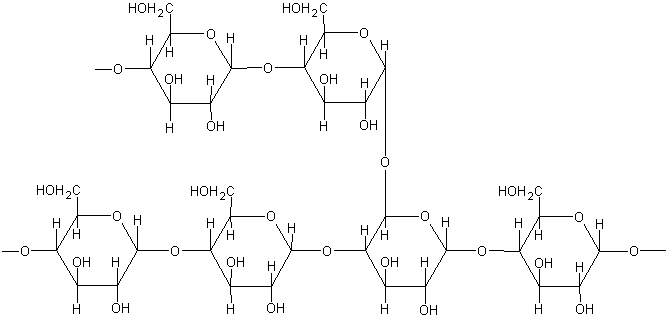
The structure of glycogen is very similar to amylopectin but more branched, with one branch every 8 to 12 glucose unit

Glycogen is the way in which glucose is stored in animals. Glycogen is stored mainly in liver (to release glucose to blood when necessary) and in muscle, where it is used as a reserve of energy for muscular contraction (Answer to C-o8)

HETEROPOLYSACCHARIDES

Heteropolysaccarides contain two or more different kind of monosaccharides. Usually they provide extracellular support for organisms of all kingdoms: the bacteria cell envelope, or the matrix that holds individual cells together in animal tissues, and provides protection, shape and support to cells, tissues and organs.

Heteropolysaccharides provide extracellular support to very different organisms, from bacteria to humans; together with fibrous proteins, like collagen, elastin, fibronectin, laminin and others, heteropolysaccharides are the most important components of the extracellular matrix.  Hyaluronic acid, condroitin sulfates and dermatan sulfates are important heteropolysaccharides in the extracellular matrix. These heteropolysaccharides usually are formed by the repetition of a disaccharide unit of an aminosugar and an acid sugar. 

A typical example

Other common constituents are sulfate groups linked to certain monosaccharides. Usually heteropolysaccharides are associated with proteins forming proteoglycans, glycosaminoglycans or mucopolysaccharides (since they are abundant in mucous secretions). As a group, they perform diverse functions: structural, water metabolism regulation (as a reservoir of water), cellular cement, biological sieve, biological lubricant, docking sites for growth factors, among other functions.

Established specific functions of some glycosaminoglycans are:

Hyaluronic Acid (Hyaluronate): It is a lubricant in the synovial fluid of joints,

give consistency to vitreous humor, contributes to tensile strength and elasticity of cartilages and tendons (Answer to C-O6)

Chondroitin Sulfates: contributes to tensile strength and elasticity of cartilages, tendons, ligaments and walls of aorta.

Dermatan sulfate (former chondroitin sulfate B) is found mainly in skin, but also is in vessels, heart, lungs. It may be related to coagulation and vascular diseases and other conditions.

Keratan sulfate: Present in cornea, cartilage bone and a variety of other structures as nails and hair.

Heparin

It is a potent natural anticoagulant produced in the Mast Cells that causes antithrombin bind to thrombin and produce inhibition of blood coagulation.

Glycosaminoglycans are synthesized in the ER and Golgi. They are degraded by lysosomal hydrolases. A deficiency of one of the hydrolases results in a mucopolysaccharidosis. These are hereditary disorders in which glycosaminoglycans accumulate in tissues, causing symptoms such as skeletal and extracellular matrix deformities, and mental retardation.

Examples of these genetic diseases are Hunter and Hurler syndromes.

These diseases, caused by different enzyme deficits, are characterized by physical deformities, mental retardation and disturbances in the degradation of heparan sulfate and dermatan sulfate.

Biochemistry Questions: Carbohydrates and Medicine

Question:

A 15-year-old black male patient complains that lately, after the ingestion of dairy products, he experiences bloating, cramps and flatulence, and sometimes diarrhea. With this information, it is reasonable to think that the patient is intolerant to:

a) cellobiose

b) lactose

c) mannose

d) sucrose

e) maltose

f) isomaltose

g) fructose

Solution:

(b) lactose

Lactose is the milk sugar.

It is formed by Beta-D galactose and D-glucose. The galactose is linked to the glucose through a beta 1,4-O-glycosidic linkage.

This linkage is hydrolyzed by a specific disaccharidase called Lactase, located in the brush border of the epithelial cells of the small intestine. The glucose and galactose are absorbed and transported through the portal system to the liver.

In spite of the common believe in developed countries, that consume great amounts of dairy products, most of the humanity are glucose intolerant. Human beings show a decrease in the synthesis of lactase after the 4 years of age. In persons with primary lactose intolerance (the “physiological” one we are talking about), this decrease is usually evident after 6 years of age, in some cases after puberty, and most of the lactose contained in the ingested food remain undigested and continue to the large intestine. where it is fermented by intestinal bacteria, producing gases, organic acids and a decrease in the pH.

It can be manifested with cramps, abdominal pain, and other gastrointestinal disorders, that begin 1 to 2 hours after the ingestion of dairy products. This condition is more frequent among Afro American than among white Americans.

Another kinds of Lactose intolerance are a congenital form, very rare, and lactose intolerance secondary to intestine diseases, including infections.

In fact, primary lactose intolerance can be hardly considered a disease, since there is a genetic programmed decrease in the synthesis of lactase (Humans were not ‘supposed” to drink milk after a few months of life!). Since around 70 % of the whole population is lactose intolerant, it has been proposed that lactose intolerance should be considered the norm, and that the minority should be considered as a lactase persistent group, that appeared as mutation of the “normal” gen.

Anyway, for those persons living in a society where milk is an important componente of diet, to be intolerant to lactose convey certain minor problems.

The “treatment” consist mainly in avoiding lactose containing products (but recall to supplement calcium and other minerals usually associated to dairy products!)

More information about this condition can be found in:

National Digestive Diseases Information Clearinghouse.

Policy of the American Academy of Pediatrics about Lactose Intolerance (2006)

Marks, J.W.: Lactose intolerance (Lactase deficiency)

Swagerty, D.L.; Walling, A.D.; Klein, R.M.: Lactose Intolerance

Guandalini, S.: Lactose Intolerance

Friday, March 26, 2010

What is the syllabus of CSIR UGCNET life science syllabus?

CSIR-UGC National Eligibility Test (NET) for

Junior Research Fellowship (JRF) and Lecturer-ship (LS)

SYLLABUS FOR LIFE SCIENCES


Just DOWNLOAD YOUR COPY with reference books in the syllabus


Download:CSIR UGC NET life science previouspaper Dec2008

CSIR UGC NET life science previous paper Dec2008


Thursday, March 18, 2010

Some Useful Downloads for CSIR-UGC-NET preparing students

· IIT JAM Previous Year Papers

· CSIR NET JRF Paper -2 Sample Question Paper (PDF format, 85 kb)

· IISc Entrance 2006 Question paper

· IISc Entrance 2008 Question Paper

· Download DBT JRF: Tips and tricks, how to prepare- class recording(16.39 MB, .exe format, requires adobe flash player)

· Download DBT JRF: Tips and Tricks, How to prepare Powerpoint(2.85 MB, PDF format)

· Download GATE Tips n Tricks eBook - Part 1

· CSIR NET JRF Subjective question Paper

· Special Class by Shikha Sinha: Part 2- 22nd march 2009

· Special Online Class on Molecular Biology Tools and Techniques - Class Recording - Conducted by Mrs Shikha Sinha for CSIR NET JRF Students ( 21.6 MB)

· GENETICALLY MODIFIED ORGANISMS ( GMOs) & ENVIRONMENT

· CANCER TREATMENT BY HUMANIZED ANTIBODY

source: biotecnika.org

Check your Life Science knowledge with this Test in CSIR-UGC-NET


Just Click “Click Here” link and give ur name & Email ID. this test help by biotecnika.org

Test 1
Generalised full syllabus test on all india basis
Click Here

----------------------------------------------------------------------------

Test 2
Generalised full syllabus test on all india Basis
Click Here

-------------------------------------------------------------------------------

Test 3
Cell organisation,Chromosomes,DNA-structure and replication,Evolution, RDT and genetic engineering

Click Here

------------------------------------------------------------------------------

Test 4

  • Proteins-
    • structure,
    • classification &
    • properties,
  • Carbohydrates,
  • Fat metabolism,
  • Nitrogen metabolism
  • Vitamins
Click Here

-----------------------------------------------------------------------------

Test 5

  • Enzymes,Coenzymes (Activators,Inhibitors)
  • Thermodynamics
  • Enzyme Kinetics
  • Enzyme activity regulation
  • pH (H.H Equation)

Click Here

------------------------------------------------------------------------------

Test 6

  • Nucleic Acid Structure
  • Genetic code
  • DNA Repair
  • DNA replication
  • Transcription
  • Translation

Click Here

------------------------------------------------------------------------------

Test 7

  • Cell division
  • cell organelle
    • structure
    • Function
  • Cell cell Interaction
  • Structure of Prokaryotic and Eukaryotic cell

Click Here

------------------------------------------------------------------------------

Test 8

  • Bioenergetics,
  • glycolysis,
  • oxidative phosphorylation,
  • coupled reaction,
  • group transfer,
  • biological energy transducers

Click Here

------------------------------------------------------------------------------

Test 9

  • Amino Acid Metabolism
  • Cordinated control of metabolism
  • Biosynthesis of Purines & Pyrimidines
  • Oxidation of Lipids
  • Biosynthesis of Fatty acid, Triglyceride, Phospholipid and Sterol.

Click Here

------------------------------------------------------------------------------

Test 10
Cancer: Genetic rearrangements in progenitor cells, oncogenes, tumor suppressor genes, cancer and the cell cycle, virus-induced cancer, metastasis, interaction of cancer cells with normal cells, apoptosis, therapeutic interventions of uncontrolled cell growth.
Click Here

------------------------------------------------------------------------------

Test 11
COMMON ELEMENTRY COMPUTER SCIENCE: dealing with basic computer awareness and uses
Click Here

------------------------------------------------------------------------------

Test 12

  • Principals and applications of Gel Filtration
  • Ion Exchange and affinity Chromatography
  • Thin layer and Gas chromatography
  • HPLC
  • Principals and applicationsNucleic Acid Hybridization and cot curve
  • Sequencieng of Proteins and nucleic acid
  • Southern, South-western, northern blotting
  • PCR

Click here

------------------------------------------------------------------------------

ALL THE BEST

Source: biotecnika.org/net-jrf-coaching

Monday, March 15, 2010

Guidelines for CSIR JRF

CSIR has been changed the syllabus of NET JRF and We analyzed the syllabus quite precisely and its seems that many advanced are of research has been included. Although it will be the first exam by new syllabus, we would strongly recommend below guidelines.

Syllabus has been splited into ten units. Here we are highlighting important resources.

Unit 1.

Books:

1. Voet and Voet Biochemistry, 2. Stryer Biochemistry, 3. Biology by Campbell Reece

UNIT 2

For A,B,C,D : Lodish Molecular Biology , Chapter 29 Eukaryotic gene regulation from Voet and Voet.

For E : Presscott Microbiology

UNIT 3 This unit is most important, if we want to solve many questions.

For A-D Lodish and Voet

UNIT 4

A Presscot, B-D Lodish, E Kuby and Pressoctt

UNIT 5

Developmental biology by gilbert

Albert Lodish and voet has good chapter on development biology. good for review or introduction.

UNIT 6

Plant Physiology : Buchanan and for some topics consult Voet and Voet

UNIT 7

Animal Physiology : An Ebook by wikipedia found to be really important. But there are many printed books are also available. Go for any basic book. This topic will not covers too many questions.

UNIT 8

This is another important unit which students should get command.

Gardner, Griffith and Benjamin. Read precisely and solve all the questions.

UNIT 9

Biology by Reece

NCERT Book of 11 and 12

Biology by Raven

UNIT 10

Ecology by smith and smith

Ecology by PD Sharma

Good Ecology Notes

UNIT 11

We dont have any good reference. All we rely on notes from various sources and electronic forms. We would appreciate if somebody can recommend some good books.

UNIT 13

Segel Biochemical Calculation

Wilson and Walker Instrumentation

Old and Primrose : RDT

TA Brown : RDT

For Stats and Bioinfo we have notes.

Other Important Resources

Podcast : listen and watch the video and audio podcast from University sites. Use ItuneU and an Ipod to download the videos and audio podcasts.

Question banks: Solve the question and try to understand the concepts

Review and Lecture notes : Good for revision

Ebooks : There are plenty of ebooks are available. at http://biobooke.blogspot.com/

English Improvement : Its most important to write correctly to get good marks.

The more you solved the question, the chance is high to get selected. Try to solve it.

All the best for your examSolve the old question paper and model question papers given below in the tabel

Thursday, March 11, 2010

Molecular Biology Notes for Students

Nucleic Acids Nucleic Acids Classification, Nucleic Acids Structures,

            DNA, DNA as genetic material, Structure of DNA, Organization Of DNA, Supercoiling, DNA Code,

DNA Manipulation, DNA Applications, DNA Chronicle, DNA Timeline, Plasmid DNA, Plasmids,

            RNA, RNA Synthesis, Structural Classification of RNA,

Central Dogma & Genetic Code

Genetic Nomenclature, exploring genes

Replication ( DNA DNA)

Replication, Prokaryotic DNA Replication, DNA Supercoiling, Topoisomerases

E.coli DNA Polymerase I - Klenow Fragment, DNA Polymerases IV and V, HIV-1 Reverse Transcriptase, Rat DNA Polymerase Beta,

DNA Pol III Beta-Subunit & PCNA, Bacteriophage T7 DNA Ligase

Recombination,

Transcription ( DNA →RNA )

Transcription, Exons and coding sequences, Eukaryotic Transcriptional Regulator

IFN-beta enhanceosome, RNA polymerase II transcription, Origin recognition Complex, Transcription-repair coupling

RNA Pol II General Transcription Factors, TBP, TFIIA and TFIIB, NF-kappa-B
Transcriptional Regulation: Transcription Termination, the trp Operon, Post Transcriptional Process

RNA Folding, Control of gene expression, Regulation, Transcription, RNA processing, mRNA turnover, Gene silencing

Translation ( mRNAProtein )

Translation, Protein Synthesis, protein synthesis2, mRNA Translation, Aminoacyl-tRNA Synthetases, control of gene expression,

Gene regulation, The lac operon, Operon, The lac Operon, CAP Site, Control of Gene Expression, Protein synthesis and turnover

Post Translational Process, Protein folding, Molecular Chaperones,

Protein Trafficking, Protein translocation, Protein Modifications and Targeting

Protein Folding, Protein folding 2,

DNA and Protein, DNA Protein Interactions, Gene interactions,

Selectable Markers

Transformation, Transgenic Plants, Transgenic Concerns, GMO Detection, Functional Foods

Transposons

DNA Repair, DNA Damage & Repair

DNA Repair Enzymes

Splendid Review of DNA Repair Enzyme Structures

Uracil-DNA Glycosylase

Restriction / Modification Systems

Enzymes

          Exonuclease III-Cuts Only 3' end

          S1 Nuclease -(from the fungus Aspersillus oryzae) cleave single strand

          DNase I -(cut both single strands )

Restriction Mapper

Bacteriology for the Molecular Biologist

Controls in Molecular Biology

Human Chromosome Analysis

Wednesday, March 10, 2010

Biochemistry / Biomolecules Notes for Students

Basic Biochemistry -

1) Structure of atoms, Atoms and molecules, molecules and chemical bonds, Molecules and weak bonds, principle of physical chemistry, Non covalent Interaction,

2) Thermodynamics, kinetics, dissociation and association constants

3) Acids, Bases and Buffers, Principle of Ionization of Weak Acids, Titration of a Weak Acid illustrating its Ionization and Buffering Property, Ionization of Simple Amino Acids, Ionization Rules 1, Ionization of Complex Amino Acids, Ionization of His, Calculating pI (Isoelectric Point or pH) of His, Ionization Rules 2

Water - water1, water and organic molecules, Important properties, the low of mass action, Kw

            dissociation of water and its ion product,

Carbohydrate - Introduction, Carbohydrates classification, properties, function,

1) Monosaccharides: nomenclature, stereochemistry, & cyclic forms, aldolase, glucose, fructose, galactose, Disaccharide: Glycosidic bonds

2) Oligosaccharides of glycoproteins & glycolipids Oligosaccharides, sucrose, maltose

3) Polysaccharides - amylose, amylopectin & cellulose, Glycosides,

Homopolysaccharides

Glucose monomer - starch, glycogen, cellulose, chitin

Galactose monomer - agar, pectin

Heteropolysaccharides

Hemicellulose

Glycosaminoglycans & proteoglycans, glycolipids, Sugar derivatives, Lectins, Glycosaminoglycans and Proteoglycans

Protein - properties (primary, secondary, tertiary, quaternary) Proteins Functions, Classification, Structure,

Protein Architecture-I, Architectrure-II, Stability And Unfolding, Physicochemical Properties, Protein Hormones,

The Influence Of Environment On Protein Conformation, Correlations b/w Amino Acid Seq. & Conformation

Intermolecular Interactions In Proteins,

1) Amino acids shape & structure of amino acids, structure, functional, properties, Peptide bond, b-sheet

Amino Acid Sequencing Methods, Characterization of Proteins

1) Aliphatic - alanine, glycine, isoleucine, leucine, valine

2) Nonpolar R group- methionine, phenylalanine, proline, tryptophan

3) Positively Charged- arginine, histidine, lysine

4) Negatively Charged- aspartate, glutamate

5) Polar- asparagine, cysteine, glutamine, serine, threonine, tyrosine

2) Structural Biophysics of Protein Principles of Protein Structure, Primary Structure, Protein Secondary Structure, Protein Tertiary Structure, Protein Folding and Evolution, Evolution of Protein Structures, Part I. Homologous Proteins, Evolution of Proteins/Enzymes with Complex Functionality, Enzymes with the Same 3-D Shape but Different Functions, Summary

Membrane Protein Structure, Secondary structure and motif, Motif and Domains, Globular protein & Protein aggregates, Evolution of protein & Protein engineering, Primary Structure, Secondary Motifs, Tertiary Architecture And Quaternary Organization,

3) Enzymes Enzyme Biochemistry Introduction, function, reaction and enzymes, Nomenclature And Mechanism Of Enzyme Catalysis, Enzyme Kinetics, Enzymes as Nano-Engines, Enzyme Kinetics Hemoglobin, Allosteric Enzymes and Regulation of Enzyme Activity, Factor That Influence Enzyme Activity, Enzyme Catalysis, Enzyme Catalysis, Mechanisms, Enzyme Catalysis Examples1, Examples2, The Specificity Of Enzymes, Enzyme Kinetics

Enzyme Inhibition, Noncompetitive Inhibition,

Enzyme Regulation, Allosteric Regulation, Hemoglobin - Positive Cooperative, Feedback Regulation and Covalent Modification, Summary

4) Protein Engineering Mutagenesis & Enzyme Catalysis via Transition State, Transition-State Theory of Enzyme Catalysis, Transition-State Analogs as Very Good Enzyme Inhibitors, Transition-State in Enzymes & Biotechnology, Site-Directed Mutagenesis of an Enzyme, Transition-State Intermediate Binding in an Enzymes

Isolation techniques and purification of proteins and amino acids, Protein Purification I, II, Summary

Henderson-Hasselbalch equation, Protein Architecture

Lipids - Types, classification, nomenclature, properties, function, lipids and membranes, Biological Membranes

Fats = Glycerol + 3 fatty acids

1) Simple lipids, lipid 2, Oils, Waxes

2) Compound Lipids, Phospholopids, Sphingolipids, Glycolipids, Lipoproteins, Lecithin, Cephalin, Plasmalogen, Lipositol, Sphingomyelin,

Terpenoids and Steroids, Terpenes, Sterols, Androgens and estrogens, Adrenal corticolsteroids,

Application Of Phospholipids In Biology, Steroid And Steroid Hormones

Basic Techniques

3D structure membrane proteins

Intermediary Metabolism Notes for Students

Metabolism Cellular Metabolism, Inborn Errors in Metabolism

Carbohydrate Metabolism

Glycolysis, Glycolysis, Glycolysis & Gluconeogenesis, Gluconeogenesis, Glycolysis and the Krebs Cycle

The TCA Cycle and PDH, Kreb's - TCA - Citric Acid Cycle,

Pentose Phosphate Pathway, Pentose Phosphate Pathway,

Glycogen Metabolism, Glycogen Metabolism2, Glycogen Biosynthesis & Galactose Pathway,

            Calvin Cycle,

Metabolism of Major Non-Glucose Sugars,

Metabolism of Ethanol, Glucuronate Metabolism,

Regulation of Blood Glucose Levels, AMPK: Master Metabolic Regulator, Type 1 and 2 Diabetes Mellitus,

Lipid Metabolism

            Triacylglycerol Metabolism,

Activation of Fatty Acids, Beta-Oxidation of Fatty Acids - even chain, Beta-Oxidation of Fatty Acids - odd chain,

Beta-Oxidation of Polyunsaturated Fatty Acid, Alpha-Oxidation Pathway, Cholesterol Biosynthesis 1,

            De Novo Biosynthesis of Fatty Acids,

Phospholipid Metabolism, Sphingolipid Metabolism, Eicosanoid Metabolism,

Fatty Acid Oxidation, Cholesterol and Bile Metabolism,

Amino Acid Metabolism

Amino Acid Metabolism, Amino Acid Derivatives,

            Glutamate Reactions, Kreb-Henseleit Urea Cycle, Shikimate Pathway, Phenylalanine and Tyrosine Biosynthesis,

Tryptophan Biosynthesis,

Energy Metabolism

ATP metabolism, ATP and Biological energy, Chemistry of ATP Synthesis

Oxidative Phosphorylation, Mitochondria & Oxidative Phosphorylation, Oxidative Phosphorylation

Methane Metabolism

DNA Metabolism

RNA Metabolism

Photosynthesis - Photosynthesis1, Photosynthesis2, Photosynthesis3

Nucleotide Metabolism DNA Metabolism, RNA Metabolism

Other Metabolism Iron, Heme and Porphyrin Metabolism

Nitrogen Metabolism and the Urea Cycle, Nitrogen Fixation

Cellular Energetics - Biosynthesis, Catabolism

Anaerobic Pathways - Glycolysis & Fermentation

Aerobic Pathways - Krebs & Beta Oxidation

Thursday, December 24, 2009

What is the Syllabus of CSIR-UGC NET?

What is the Syllabus of CSIR-UGC NET? Where do I find Online papers and other study materials (like recommended books and coaching institutes) for CSIR-UGC NET exam?


These are the questions which come to your mind as soon as you decide upon appearing in the CSIR-UGC NET. This particular blog post is dedicated to answering your these questions.

Let’s focus now the topic of this post: Syllabus/Online papers/study materials for CSIR NET.


Syllabus of Paper-I (Part-A) of CSIR-UGC NET: (Common to all subjects)


1. General information on Science and its interface with society to test the candidate’s awareness of science, aptitude of scientific and quantitative reasoning. Questions would be so designed to judge the creativity, analytical ability and research aptitude of a candidate.


The questions would be setup in each of the subject areas of NET, viz., Chemical Sciences; Earth, Atmospheric, Ocean & Planetary Sciences; Life Sciences; Mathematical Sciences and Physical Sciences.

2. Common Elementary Computer science:

(Applicable to all candidates offering any subject area; A few questions dealing with basic computer awareness and uses.)

(i) Programming instructions

(ii) Simple algorithms and Computational methods.

Download the sample model Paper of Paper-I (Part-A) of CSIR-UGC NET

LinkWithin

Related Posts Plugin for WordPress, Blogger...